Le Pass
- 4.3
- Rating
- 100.00K
- Installs
- Free
- Price

 Analysis by App-foxy
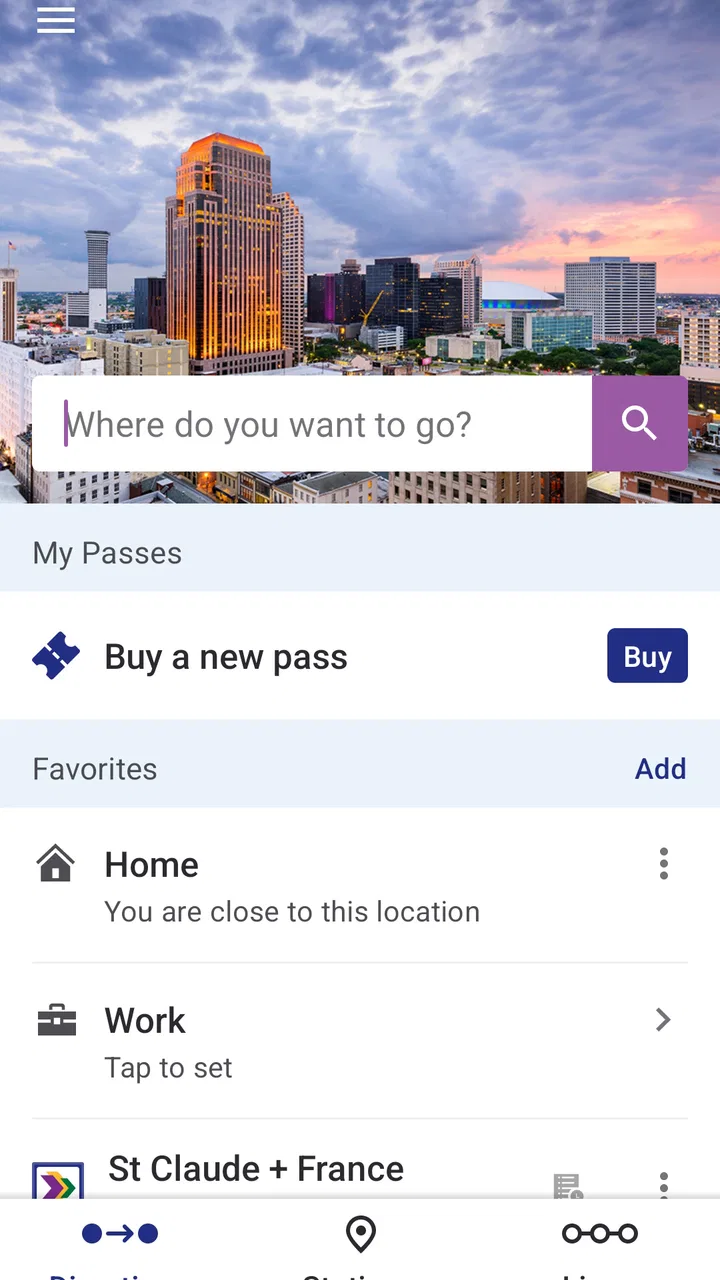
When I need to move around New Orleans by public transportation, I would rather have one focused tool than jump between a general map app, a transit website, and a separate ticket screen. Le Pass is built for that particular job: planning trips and buying passes for New Orleans RTA buses, streetcars, and ferries. After spending time with it, I see it as a practical companion for regular riders and visitors who want the city’s transit options gathered in one place.
It is a free Maps & Navigation app from the New Orleans Regional Transit Authority, with an Everyone content rating. Its store profile shows a 4.5 average from around 2.3 thousand ratings, while more than 100 thousand people have installed it. Those figures suggest a healthy level of interest, but the more important question is whether its focused approach fits the way you travel.
How Le Pass works in everyday travel
The app’s main appeal is its combination of route planning and pass purchasing. Instead of treating a bus, streetcar, or ferry as a separate service, it gives you a transit-centered place to think through a journey. That matters in New Orleans, where the best route may involve more than one type of RTA service and where a visitor may not immediately understand how the network fits together.
You May Also Like

 Blood Strike: 2.5 Anniversary
Blood Strike’s Loadouts Turn Every Drop Into a Tactical Gamble
A close look at Blood Strike’s custom loadouts: how fast access to signature weapons reshapes its battle royale rhythm, rewards preparation, and narrows the gap between fights.

 Pandora - Music & Podcasts
Pandora’s Music Is Easy to Start, but Harder to Recover
Pandora’s strength is its low-effort path from a seed to a station. Its weak spot is how much confidence it asks you to place in connection, setup, and quiet recovery.

 8 Ball Pool
 Is Built on Rivalries, Rematches, and Routine
A close look at the rivalries, rematches, shared routines, and unanswered safety questions that turn a quick pool match into a persistent mobile community.

 Samsung Music
’s Quiet Strength Is Playing What You Already Own
Its reach comes less from spectacle than from dependable access to a personal library. That simplicity is both the app’s strongest retention engine and its ceiling.

 AccuWeather: Weather Radar
AccuWeather Review: A Quick, Clear Forecast for Everyday Decisions
For everyday plans, the best forecast is the one you can understand quickly. AccuWeather makes rain timing, radar, and local conditions easy to act on, with a few trade-offs.

 Hill Climb Racing
Why Hill Climb Racing Still Turns Crashes Into One More Run
A tiny car, a bumpy hill and one more upgrade: Hill Climb Racing keeps resurfacing because its simple chaos makes every near-miss feel personal.
More From Our News Desk



I found the most useful mindset is to open it before leaving, not only when I am already standing at a stop. Entering the trip early gives me time to compare the suggested route with the shape of the day: whether I am heading directly toward a destination, connecting between services, or choosing public transportation instead of walking the entire distance. The app is most valuable when it reduces small decisions before they become stressful.
A realistic example would be a visitor staying away from the immediate destination area and planning an afternoon that includes several stops. Rather than buying access one ride at a time without a plan, I would first map the day, check whether the route uses a bus, streetcar, or ferry, and then decide whether a pass makes sense. That workflow turns the app into more than a digital timetable; it becomes a way to organize the transportation part of the outing.
For a local rider, the benefit is different. Someone who already knows the city may not need an introduction to every route, but having trip planning and pass access together can make an occasional unfamiliar journey easier. If I normally use one corridor but need to reach a different neighborhood, I can use the app as a planning check instead of relying entirely on memory or a general-purpose navigation service.
The app is also clearly aimed at people who want to use official RTA services rather than assemble information from several unrelated sources. That focus is a strength. A broad mapping app may show public transportation as one option among driving, cycling, and walking, while Le Pass keeps the transit question at the center of the experience.
What the free price really means
Le Pass itself is free to download and use as an app. That makes trying it low-risk: you can install it before a trip, explore the planning experience, and decide whether it suits your routine without paying an app-access charge. The free entry point is especially helpful for visitors who do not yet know whether they will use buses, streetcars, or ferries frequently.
It is important to separate free app access from the passes available inside the service. The app is a tool for buying transit passes, so transportation products may still involve their own purchase decisions. I would not treat “free” as meaning every ride or every pass costs nothing. The useful takeaway is that you can get the planning and purchasing interface without paying for the application itself.
That distinction also affects how I judge value. If I use public transportation only once, the app may mainly save me research time. If I make several RTA journeys, the ability to consider a pass in the same place as the route plan becomes more meaningful. In other words, the app’s value is not a discount claim; it is the convenience of connecting travel planning with the fare decision.
I would still review the pass choice carefully before completing a purchase. A pass is worthwhile only when it matches the way I expect to travel. For a day built around walking with one necessary ride, buying a larger travel option may not be the best choice. For a schedule involving repeated movement and multiple RTA modes, the convenience can be easier to justify.
Where it saves time, and where it does not
The strongest time-saving feature is the single workflow. I can think about the destination, identify the relevant RTA service, and then consider access without leaving the transit context. That is more coherent than searching for a route in one app and then trying to work out fares somewhere else.
Another useful habit is checking the route before I commit to a pass. This reverses a common mistake: purchasing first and planning afterward. By starting with the journey, I can see whether the day’s transportation needs are substantial enough to make a pass sensible. For visitors, this also helps expose a route that may look simple on a map but depends on a particular combination of RTA services.
I would also use it as a backup planning reference even when I begin with a general map app. General navigation tools are good at comparing every possible travel mode, but they can make transit details feel like one layer among many. Le Pass is better when I have already decided that RTA is the way I want to travel and need a more focused path through that choice.
The trade-off is that a specialist transit app is not automatically the best tool for every part of a city trip. If I am comparing public transportation with walking, rideshare, cycling, or driving, a broader navigation app may provide a wider decision view. Le Pass earns its place after public transportation becomes the main plan, not necessarily before.
Practical trade-offs before relying on it
The app’s narrow focus is both its advantage and its limitation. It is designed around New Orleans RTA Bus, Streetcar, and Ferry services, so that is where I would expect the clearest value. It should not replace a general city guide, a walking planner, or a tool for comparing unrelated transportation providers.
I would also avoid treating any route-planning result as a reason to stop paying attention to the real journey. Transit plans are useful before departure, but conditions on the street can still affect how comfortable a connection feels. I would leave time for finding the stop, boarding, and making a transfer, especially when I am carrying luggage or traveling somewhere unfamiliar.
Pass purchasing adds convenience, but it also creates a moment where I need to be deliberate. The easiest option on screen is not always the most economical option for my itinerary. I would count the rides I genuinely expect to take, consider how much of the day I will spend walking, and then choose the pass that fits rather than buying automatically.
There is another practical trade-off for occasional travelers: learning a dedicated app takes a little preparation. A visitor who is already comfortable with a general map application may prefer to stay in that familiar environment for a short trip. Le Pass becomes more compelling when the trip depends on RTA transportation or when pass management is important enough to deserve its own place on the phone.
The current version listed for the app is 5.178.0.1749, and it supports Android 7.0 or later. That makes the compatibility requirement worth checking before a trip, particularly if you are using an older Android phone. On a supported device, I would install it before leaving home rather than waiting until I am at the first stop, giving myself time to become comfortable with the planning and purchase flow.
Who will get the most value
Le Pass is a strong fit for visitors who expect to use New Orleans public transportation more than once. The app gives them a place to understand the relationship between buses, streetcars, and ferries, then connect that understanding with pass purchasing. That is more useful than carrying a vague intention to “take transit” without knowing how the day’s trips will fit together.
It also suits residents who occasionally travel outside their usual route. A regular rider may not need help with familiar stops, but an unfamiliar destination can make a focused RTA planner worthwhile. I would especially consider it when a journey may involve changing between service types and I want to make the transportation plan before I leave.
Families and groups may appreciate the preparation angle as well. When several people are trying to reach a destination together, deciding the route and fare approach in advance can reduce confusion. The app does not remove every group-travel problem, but it gives the organizer one place to work through the RTA portion of the outing.
It is less suitable for someone who rarely uses public transportation and wants one app to compare every way of getting around New Orleans. In that case, a broad navigation service may be a better first choice. I would also skip making it my main travel tool if my plans are centered on services outside the RTA network, since the app’s usefulness is tied closely to the transportation systems it is designed to cover.
For a short visit with a single planned ride, I might not need to install anything beyond the navigation tool I already use. The free price removes the financial barrier, but convenience still has to justify another app on the phone. The more RTA-dependent the itinerary becomes, the easier it is for Le Pass to earn that space.
My verdict on installing and using it
I recommend Le Pass when New Orleans RTA is central to your plans. Its value comes from joining two decisions that travelers often handle separately: how to get somewhere and how to obtain access for the rides. That makes it particularly useful for visitors, occasional riders, and anyone planning a day that may combine bus, streetcar, and ferry travel.
I would not describe it as a universal navigation replacement. Its focused design means a general map app remains better for comparing transportation modes, planning walking-heavy days, or looking beyond the RTA network. The right choice depends on where the trip begins: if I am still deciding whether to drive, walk, cycle, or take transit, I start broad; if I have chosen RTA, Le Pass becomes the more relevant tool.
The free app access makes testing that fit straightforward, while the pass-purchasing function gives it a practical purpose beyond route discovery. I would install it before a transit-focused New Orleans trip, plan the journeys first, and only then decide whether a pass matches the number and type of rides I expect. That small order of operations is the best way to avoid paying for convenience I will not use.
Developed by the New Orleans Regional Transit Authority, the app has a clear audience and a clear job. With an Everyone rating and a release date of July 18, 2022, it is positioned as an accessible transit companion rather than a niche tool for experienced commuters. My final view is simple: choose Le Pass when RTA travel is the backbone of your day, and choose a broader alternative when you need to compare the whole city’s transportation landscape.
FAQs for Le Pass
01What is Le Pass, and how does it work?
Le Pass is a convenient app designed to streamline your access to various events, venues, and services. By integrating digital ticketing and membership management, it allows users to store and manage their passes easily. Simply download the app, create an account, and use it to buy, store, and display your passes when needed.
02Is Le Pass available for both Android and iOS?
Yes, Le Pass is available for both Android and iOS platforms. You can download it from the Google Play Store or the Apple App Store, depending on your device. Ensure your operating system is up-to-date for optimal performance and to enjoy the latest features of the app.
03Are there any costs associated with using Le Pass?
While downloading and using the basic features of Le Pass is free, some premium services or exclusive event passes may require additional fees. The app may offer in-app purchases for enhanced services, so users should check the pricing details before proceeding with any transactions.
04How secure is my personal information on Le Pass?
Le Pass prioritizes user privacy and employs advanced security measures to protect personal and payment information. Data encryption, secure servers, and compliance with privacy regulations are part of their security protocol. Users should also maintain their account security by using strong passwords and enabling two-factor authentication.
05What should I do if I encounter issues with Le Pass?
If you experience any issues with Le Pass, you can access their customer support through the app or their official website. The support team is available to assist with technical problems, account inquiries, or any other concerns. Additionally, checking their FAQ section and troubleshooting guides might offer quick solutions to common issues.
Pros
- User-friendly interface with intuitive navigation.
- Multiple language support for global users.
- Quick and seamless payment processing.
- Comprehensive location-based features.
- Frequent updates with new functionalities.
Cons
- Limited offline functionality restricts use.
- Occasional glitches in real-time tracking.
- High battery consumption during use.
- Ads can be intrusive on free version.
- Requires stable internet for best results.

Le Pass
Gallery